

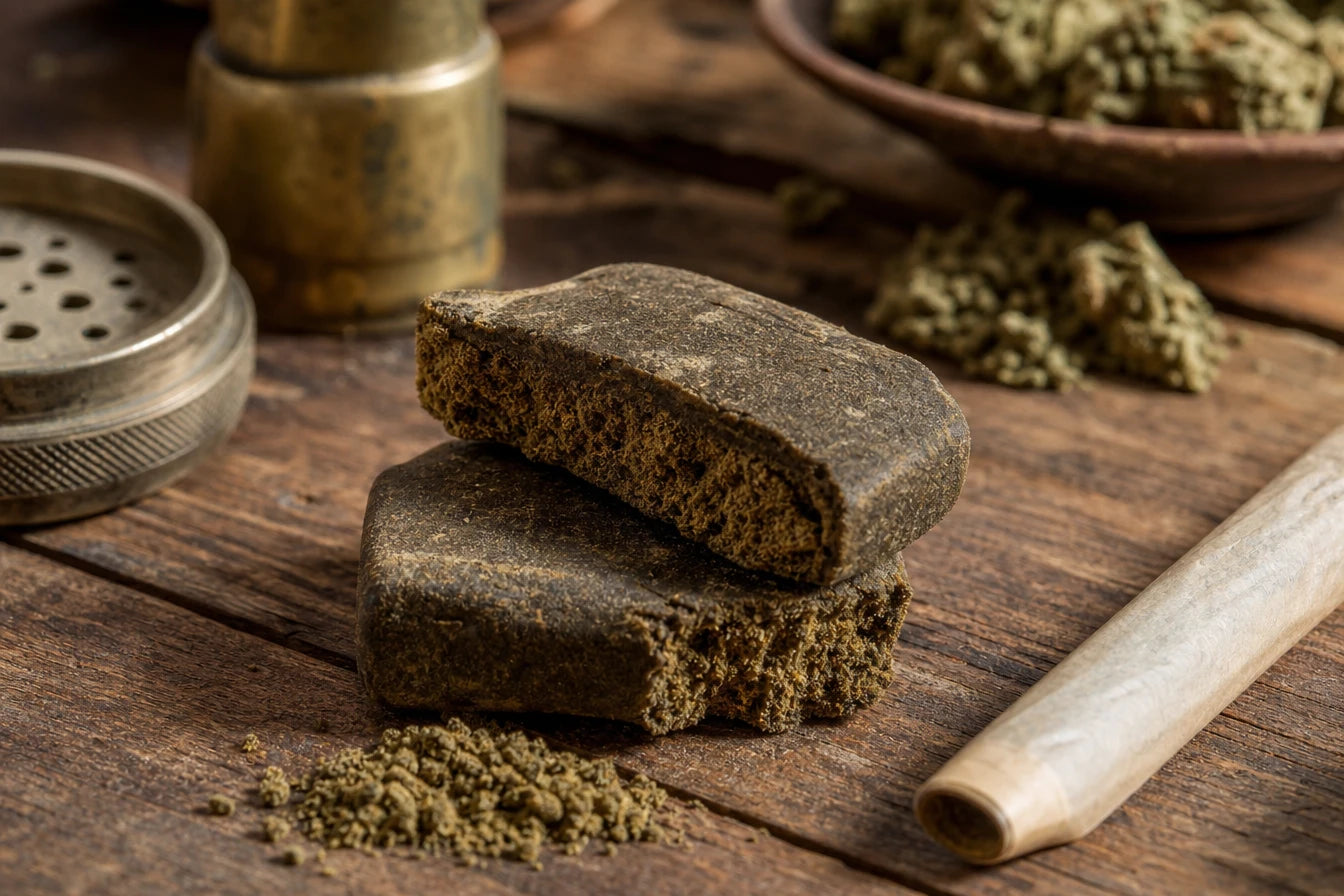
The journey of CBD hash stretches across centuries, weaving together history, tradition, and cultural meaning. Emerging from remote mountain villages and desert trade routes, this resinous product has crossed continents, inspired legends, and evolved with modern needs. More than just a contemporary trend, hashish reflects ancient customs and showcases artisanal expertise passed down through generations. This exploration looks at how pollen, hashish, and ancestral traditions connect, tracing their path from Central Asia to present-day Morocco.
Tracing the origins of hashish
The origin story of hashish reaches back further than many might expect. Ancient texts and oral traditions reveal that early civilizations discovered the unique qualities of resin-rich cannabis plants long before modern times. Historians frequently highlight regions such as India, Afghanistan, and Central Asia as pivotal for shaping the earliest forms of hashish.
Travelers, mystics, and merchants along historical trade routes observed how local communities transformed raw herbal materials into compact resins or powders. These early techniques laid the foundation for what is recognized today as hashish and, more recently, CBD hash.
Roots in central asia and india
Central Asia is widely regarded as the birthplace of hashish production. In secluded valleys and high plateaus, villagers learned to collect sticky trichomes—often called “pollen”—from cannabis flowers. By rubbing mature buds between their hands, they created a potent resin valued for both its effects and spiritual significance. This method flourished in northern India, particularly in Himalayan regions where charas remains an important tradition.
Together with neighboring Afghanistan, renowned for dense cannabis fields and closely guarded methods, these areas established themselves as global icons in hashish culture. Whether in rituals or daily life, hashish played a central role in community celebrations and customs.
Land of legends: afghanistan and beyond
Afghanistan built a lasting reputation on quality and heritage. Artisans employed generations-old secrets—sifting, pressing, and curing hand-collected pollen—to create dense, aromatic blocks. The resulting hashish, deeply tied to the rugged landscape, drew traders from afar. Western explorers in the 19th and 20th centuries often marveled at the skill involved in creating these prized products.
As hashish made its way westward, communities throughout Persia, the Middle East, and North Africa adapted and refined these traditional techniques. Each region contributed distinctive touches, giving rise to a wide variety of styles and textures.
Pollen and traditional techniques
The term pollen refers not to typical plant dust but to the valuable resin globules covering mature cannabis flowers. Harvesting this pollen requires both skill and patience, and over generations, artisans have developed diverse ways to gather, refine, and shape it. These methods reflect the resourcefulness and creativity of those dedicated to the craft of hashish making.
While some techniques remain family secrets, several common approaches continue to fascinate researchers and enthusiasts alike.
Manual extraction: the art of hand-rolled hash
One of the oldest techniques still practiced involves gently rubbing fresh cannabis blossoms between the palms, causing resin glands—or pollen—to break away and stick to the skin. The sticky layer is then peeled off and shaped by hand, typically into small balls or oblong forms. This approach thrives in humid climates, especially in Nepal, northern India, and certain parts of Pakistan.
Charas, produced through this hand-rubbing technique, holds deep ties to ancestral traditions and religious ceremonies. For sadhus and yogis, charas has long served as a sacred aid during moments of meditation and celebration.
Sieving and dry sifting
Dry sifting, also known as sieving, uses handmade screens or fine silk cloth. Dried cannabis flowers are lightly agitated over the mesh, allowing trichome-rich pollen to fall below while stems and impurities remain above. The collected powder is then pressed, and sometimes aged, to enhance flavor and aroma.
This practice achieved particular refinement in countries like Afghanistan and Morocco, where large-scale production supported entire communities. Many consider Moroccan hashish especially fragrant and malleable—a testament to how regional climate and generational knowledge converge.
Morocco: crossroads of tradition and commerce
Among all hash-producing nations, Morocco stands out as both a historical and commercial leader. Its unique “kif” culture revolves around communal enjoyment and time-honored hospitality. Over the years, local farmers and artisans combined imported ideas from the East with indigenous knowledge, creating one of the world’s most celebrated hashish styles.
Today, the Rif Mountains attract both cannabis aficionados and historians eager to experience the resilience of ancestral traditions. However, economic pressures and changing laws continue to influence how pollen is gathered and processed into hashish.
Evolution of Moroccan techniques
Traditional Moroccan hash production depends mainly on dry sifting, followed by gentle warming and hand-pressing. Workers carefully monitor temperature and humidity to ensure optimal texture, resulting in products ranging from golden, crumbly pollen to darker, oilier slabs. Popularity soared throughout Europe in the late twentieth century, bringing new opportunities for rural communities, but also fresh challenges due to surges in demand and changes in law enforcement.
Generational transfer of skills ensures each artisan brings personal touches while respecting foundational methods inherited from elders. Local stories, songs, and rituals demonstrate just how deeply hashish shapes social bonds and artistic expression.
The emergence of cbd hash
In recent years, another transformation unfolded—the introduction of CBD-rich cannabis varieties into Moroccan cultivation. As consumers increasingly seek the soothing properties of cannabidiol without psychoactive effects, growers quickly adapted. CBD hash preserves cherished sensory qualities while offering a modern response to evolving wellness interests.
This product often relies on the same respected sieving and pressing methods, bridging past and present. While regulatory frameworks shift, the core of Moroccan hash craftsmanship endures, reinforcing links to gendered labor roles and longstanding beliefs.
Ritual and meaning in ancestral traditions
Hashish carries significance far beyond recreation; it embodies sacred and symbolic roles in societies across Asia, Africa, and the Middle East. Whether used in initiation rites, seasonal festivals, or meditative practices, hashish serves as both a social connector and a bridge to transcendence.
Ancestral traditions associate cannabis not only with well-being but also with storytelling, music, and mystical experiences. References to hashish can be found in Persian poetry, Indian scriptures, and oral histories shared by griots in distant villages.
Cultural symbolism and transmission
Within Sufi circles, hashish was sometimes consumed in structured settings to foster spiritual reflection. Shared among trusted companions, it cultivated unity and openness. Music, chanting, and dance often accompanied these gatherings, blending sensory pleasure with deeper meaning.
Across India and Nepal, wandering saints still honor hash as both medicine and a means to access altered states in line with faith practices. Handcrafting hash often coincides with community events, marking harvest cycles and celebrating family continuity.
Hashish in daily life
For countless families, producing hashish is closely linked to agricultural rhythms and household economics. Roles assigned to men, women, and children reflect longstanding hierarchies, yet offer agency and stability. Market days become lively scenes, with groups exchanging knowledge, comparing products, and negotiating prices.
Consuming hashish—whether eaten, smoked, or used otherwise—requires observing locally prescribed etiquette. Sharing strengthens kinship and trust, values deeply woven into regions shaped by adversity and migration.
- Pollen gathering: Harvest occurs at the end of flowering, when resin levels reach their peak.
- Hand-sieving: Cloth or fine mesh separates precious trichomes from less desirable plant material.
- Pressing and aging: Warm stones, wood, or skilled hands mold sifted pollen into bricks or balls suitable for storage.
- Ceremonial use: Special occasions feature collective consumption, strengthening connections across generations.
Where cbd hash fits today
Modern CBD hash brings together age-old wisdom and contemporary interests in wellness, legality, and innovation. Producers continue to respect the meticulous work pioneered in places like Afghanistan, Morocco, and India. At the same time, new cultivars and advanced analytical tools allow more predictable concentrations of beneficial compounds while preserving the aromas and textures valued by connoisseurs.
Many consumers look for a blend of sensory enjoyment, ancestral heritage, and subtle health benefits associated with CBD. For those interested in exploring a curated selection, a range of premium CBD hash products is available, offering quality and authenticity. For them, purchasing or preparing CBD hash serves as a tribute to traditions refined over centuries.
Responsible sourcing and authenticity
The growing market for CBD hash raises important questions about sustainable development, transparency, and fair compensation. Buyers increasingly seek products crafted with honest sourcing, ethical practices, and traceability from farm to finished block. Certifications and cooperative models have emerged, though artisanal values remain highly prized among purists.
Preservation of know-how within villages is crucial so younger generations can maintain pride and autonomy. Educational programs pairing elders with apprentices help ensure resilience in the face of economic and regulatory changes.
Innovation meets tradition
Hybrid methods now combine stainless steel equipment and laboratory precision with centuries-old manual skills. Some producers experiment with infusions, terpene enhancement, or creative packaging to expand appeal. Despite these innovations, the spirit of CBD hash remains rooted in quiet workshops and village squares, where patience and devotion outweigh haste and mass production.
This ongoing interplay sustains the legacy of hashish, anchoring fast-moving markets in memory and cultural identity. Whether enjoyed privately or shared among friends, CBD hash powerfully illustrates how humanity continues to adapt ancient gifts to ever-changing times.


